
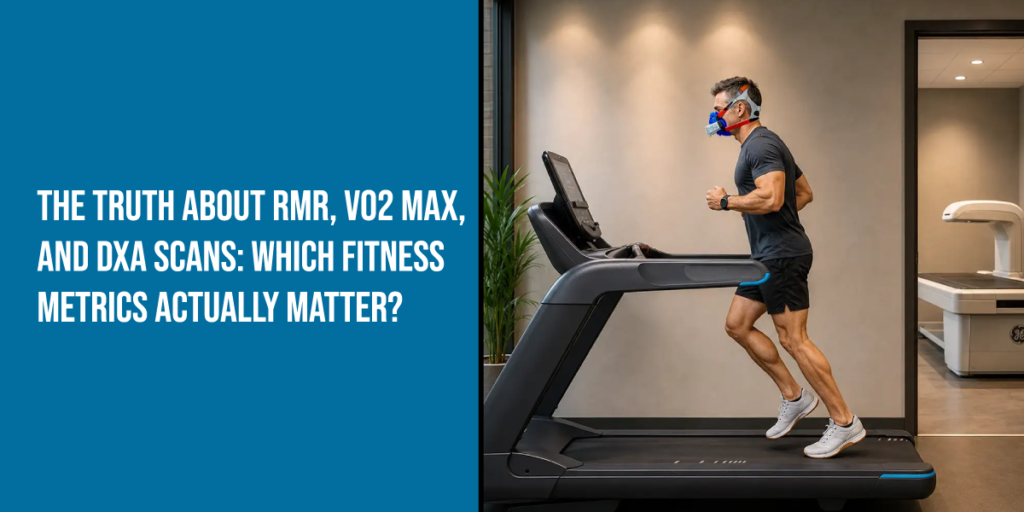
Most fitness journeys stall for one simple reason: people track the wrong numbers.
You weigh yourself every morning, count every calorie on an app, and rely on smartwatches that estimate your daily burn with massive margins of error. You put in the sweat, cut back on meals, and yet your body composition refuses to budge.
It is time to uncover the truth about RMR, VO2 Max, and DXA scans.
If you want true strength, metabolic resilience, and longevity, you must move past mirror checks and step onto the foundation of clinical data. Advanced fitness testing—specifically a resting metabolic rate test, a VO2 max fitness test, and a body composition DXA scan—takes the guesswork out of your training.
This guide breaks down what these gold-standard metrics measure, how they compare, and which parameters deserve a permanent spot in your routine.
Key Takeaways: Advanced Fitness Metrics at a Glance
| Metric | What It Measures | Best Used For | Testing Frequency |
| RMR (Resting Metabolic Rate) | Calories burned at total rest | Setting accurate daily calorie/macro targets | Every 6–12 months |
| VO2 Max | Maximum oxygen usage during exertion | Cardiovascular capacity, aerobic efficiency, longevity | Every 3–6 months |
| DXA Scan | Bone density, precise lean muscle, visceral fat | Tracking true body composition and fat distribution | Every 3–6 months |
What is the Truth About RMR, VO2 Max, and DXA Scans?
Fitness metrics fall into two broad categories: indirect estimates and direct clinical measurements. Most commercial wearables estimate your stats using population averages, which routinely fail to account for individual biology.
Clinical laboratory tests evaluate your precise physiology:
- RMR (Resting Metabolic Rate): Measured via indirect calorimetry by analyzing your oxygen intake and carbon dioxide output while resting.
- VO2 Max: Measured via incremental exertion protocols on a treadmill or bike while analyzing breath-by-breath gas exchange.
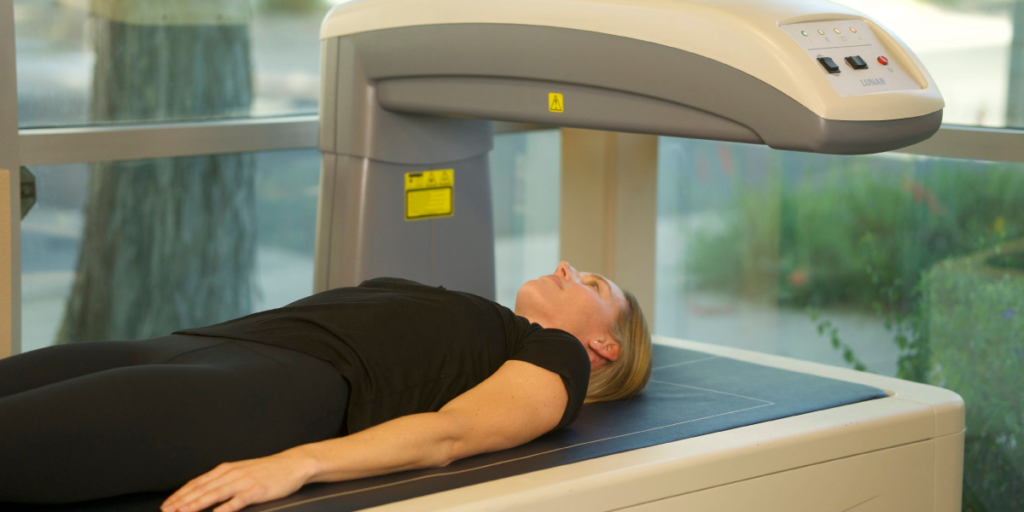
- DXA Scan: Measured using low-dose, dual-energy X-ray absorptiometry to map fat mass, lean muscle tissue, and bone mineral content across specific body regions.
Tracking these three clinical metrics replaces generalized formulas with your exact baseline numbers.
Metric 1: Resting Metabolic Rate (RMR) Explained
What is an RMR Test?
Your Resting Metabolic Rate (RMR) represents the total number of calories your body burns at absolute rest to maintain vital baseline functions—such as breathing, pumping blood, managing cellular repair, and brain activity.
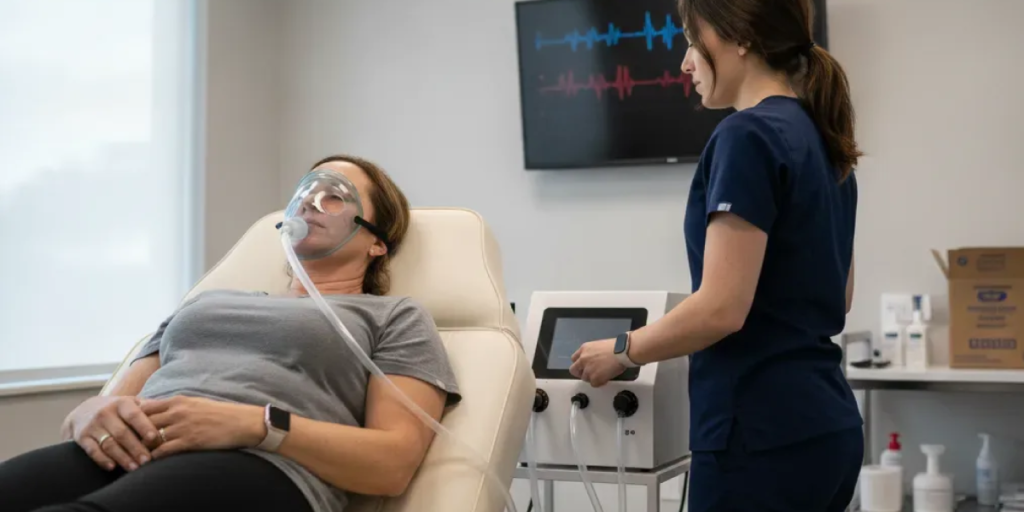
An accurate RMR test uses indirect calorimetry. You relax in a comfortable, temperature-controlled environment while breathing into a specialized mask or canopy. The system measures oxygen consumption (VO2 and carbon dioxide production (VO2) to calculate your actual baseline caloric expenditure.
| Component | Share of Total Daily Energy Expenditure (TDEE) | Function |
| RMR (Resting Metabolic Rate) | 60% – 75% | Vital bodily functions at absolute rest |
| NEAT (Non-Exercise Activity Thermogenesis) | 15% – 20% | Daily movement, walking, fidgeting, standing |
| TEF & Exercise | 10% – 15% | Digestion energy cost and structured workouts |
Why RMR Matters
Standard online calculators rely on formulas like the Harris-Benedict or Katch-McArdle equations. These formulas assume normal metabolic output based on age, height, and weight. However, two individuals with identical body weights can have metabolic rates that differ by up to 500 calories per day due to genetics, muscle mass, thyroid function, and past dieting history.
- Prevents Metabolic Adaptation: Eating too far below your real RMR forces your body to slow its energy output, triggering muscle loss and thyroid down-regulation.
- Establishes Accurate Deficits/Surpluses: Knowing your baseline allows you to set precise energy intake targets for fat loss or muscle hypertrophy.
- Detects Metabolic Dysfunction: Unusually low RMR values highlight metabolic slowdowns caused by chronic restrictive diets.
Metric 2: VO2 Max Testing and Cardiovascular Health
What is a VO2 Max Test?
VO2 Max measures the maximum volume of oxygen your body can transport and utilize during high-intensity exercise. It serves as the ultimate benchmark for cardiovascular fitness and aerobic power.
During a VO2 max fitness test, you exercise on a treadmill or stationary bike while wearing a specialized mask connected to a metabolic analyzer. The workload increases incrementally every few minutes until you reach peak physical exertion.
| Stage | Organ / System | Physiological Action |
| Stage 1 | Lungs | Oxygen absorption and gas exchange |
| Stage 2 | Heart & Blood | Cardiac output and systemic oxygen delivery |
| Stage 3 | Muscles | Mitochondrial ATP production and extraction |
Why VO2 Max Matters for Fitness and Longevity
VO2 Max is not just for endurance athletes. It is one of the strongest statistical predictors of all-cause mortality and overall healthspan.
- Cardiovascular Capacity: A higher score indicates a stronger heart, efficient pulmonary circulation, and high mitochondrial density within your skeletal muscle.
- Training Zone Calibration: The test identifies your exact aerobic threshold (VT1) and anaerobic threshold (VT2). This allows you to target precise heart-rate zones for optimal Zone 2 endurance base-building and Zone 5 high-intensity intervals.
- Longevity Indicator: Observational studies consistently show that moving from the lowest quartile of VO2 max for your age group to a higher quartile dramatically reduces cardiovascular risk.
Metric 3: DXA Scans and Body Composition Analysis
What is a Body Composition DXA Scan?
A DXA scan (Dual-Energy X-ray Absorptiometry) is the gold standard for measuring body composition. While traditional scales give you a single weight number, a DXA scan uses two low-radiation X-ray beams to distinguish between three key components:
| Compartment | Included Elements | Clinical Importance |
| Lean Mass | Skeletal muscle, organs, bodily fluids | Metabolic activity and functional strength |
| Fat Mass | Subcutaneous fat & visceral fat | Metabolic risk and tissue distribution |
| Bone Density | Mineral Content (g/cm²) | Skeletal health and osteoporosis prevention |
Why DXA Scans Outperform Scale Weight and Bioimpedance
Bathroom scales and bioelectrical impedance (BIA) handheld devices alter readings based on water retention, meal timing, and skin temperature. A DXA scan eliminates these inconsistencies:
- Visceral Fat Detection: Measures dangerous visceral adipose tissue (VAT)—the deep, inflammatory fat stored around your internal organs.
- Asymmetry Mapping: Pinpoints structural muscle imbalances between your left and right sides, guiding targeted strength programs.
- Bone Mineral Density Monitoring: Tracks bone health over time, alerting you to early signs of osteopenia or osteoporosis.
RMR vs. VO2 Max vs. DXA Scan: Comparison
Understanding how these tests complement one another helps you structure your testing plan:
| Feature | RMR Test | VO2 Max Test | DXA Scan |
| Primary Focus | Energy Expenditure & Metabolism | Cardiorespiratory Fitness & Stamina | Structural Body Composition |
| Key Output | Exact baseline calorie burn | $mL/kg/min$ oxygen capacity & heart rate zones | Body fat %, lean mass, bone density |
| Core Goal | Nutrition planning & diet optimization | Performance training & longevity tracking | Muscle gain & fat loss tracking |
| Testing Duration | 15–20 minutes (resting) | 10–15 minutes (active exercise) | 6–10 minutes (lying down) |
| Primary Audience | Dieters, bodybuilders, metabolic health clients | Endurance athletes, HIIT enthusiasts, longevity seekers | Recomposition clients, strength lifters, general fitness |
Common Mistakes When Tracking Fitness Metrics

Tracking metrics without a clear strategy leads to confusion. Avoid these common pitfall patterns:
- Relying Exclusively on Smartwatch Data
Fitness wearables estimate calorie burn and VO2 max using algorithms based on heart rate and movement patterns. They can off-target by up to 20–40%. Use lab data to set true baselines. - Weighing Daily Without Body Composition Data
Scale weight fluctuates daily due to sodium, hydration, and glycogen stores. Losing 3 pounds of weight on a scale might mean 2 pounds of muscle loss and 1 pound of water—a net negative for your metabolic health. - Retesting Too Frequently
Body composition adaptations take time. Retesting DXA scans or VO2 max every two weeks leads to normal biological noise instead of true trend tracking. Space tests out by 8 to 12 weeks. - Ignoring Training Zones Defined by VO2 Max
Training too hard on easy recovery days and too light on hard days creates an plateau effect. Use your test-derived heart rate zones to structure workouts intentionally.
How to Get Tested: Step-by-Step Process

Preparing for your fitness assessments ensures high data accuracy.
| Phase | Core Objective | Key Action Steps |
| Phase 1: Preparation | Eliminate testing variables | Fast 8-12 hrs for RMR; avoid caffeine; wear metal-free gear for DXA |
| Phase 2: Execution | Collect baseline clinical data | Perform resting gas analysis (RMR), scan bed (DXA), exercise ramp (VO2 Max) |
| Phase 3: Integration | Build actionable strategy | Match diet to measured RMR, adjust training to VO2 zones and muscle trends |
Phase 1: Test Preparation
- RMR Test Preparation: Fast for 8–12 hours prior to testing. Avoid caffeine, nicotine, and strenuous exercise for at least 12–24 hours beforehand.
- VO2 Max Test Preparation: Hydrate well. Eat a light meal 2–3 hours before testing. Wear comfortable running or cycling gear.
- DXA Scan Preparation: Wear athletic clothing free of metal zippers, snaps, or buttons. Maintain normal hydration.
Phase 2: The Testing Experience
- RMR Assessment: Sit or recline quietly in a relaxed setting while breathing into the indirect calorimeter gas collector for 15–20 minutes.
- DXA Scan: Lie flat on an open scanner bed while the machine arm passes overhead for 6–10 minutes.
- VO2 Max Assessment: Perform a warm-up, attach the chest strap and metabolic mask, and run/cycle through progressive 1-minute to 3-minute intensity stages until exhaustion.
Phase 3: Translating Data into Action
Work with a qualified strength and conditioning coach or metabolic specialist to convert your raw data into actionable daily habits:
- Adjust your daily target intake to match your measured RMR plus physical activity.
- Set your cardio workouts to target your VO2 Max training zones.
- Adjust your resistance training and protein intake to optimize lean mass trends on your DXA scan.
Expert Tips for Using Fitness Metrics to Transform Performance
- Prioritize Muscle Mass for RMR Optimization: Skeletal muscle tissue is metabolically active. Elevating your lean tissue mass through progressive overload strength training raises your baseline RMR over time.
- Combine Zone 2 and Zone 5 Cardio: Build your VO2 max by following an 80/20 training splits: 80% of cardiorespiratory training in low-intensity Zone 2, and 20% in high-intensity Zone 5 intervals.
- Focus on Visceral Adipose Tissue (VAT): Keep your DXA-measured VAT under 100 grams (or below 1.0 lbs) to minimize systemic inflammation and metabolic risk factors.
Real-World Example: A Data-Driven Fitness Transformation
Consider two individuals starting a body transformation program:
- Subject A (Traditional Method): Uses standard online formulas to estimate a 2,000-calorie diet. Exercises randomly and tracks progress using a standard bathroom scale. After 8 weeks, weight drops by 6 pounds, but energy plummets, strength drops, and metabolism slows due to unaddressed muscle loss.
- Subject B (Data-Driven Method): Takes an RMR test, a VO2 Max test, and a DXA scan. The tests reveal a 1,650-calorie baseline RMR, a VO2 max of 34 mL/kg/min, and 28% body fat with low baseline muscle mass.
Subject B sets a structured diet based on actual metabolic output, trains in precise heart rate zones, and builds a targeted strength regimen. Eight weeks later, the follow-up DXA scan shows a loss of 7 pounds of fat along with a gain of 2 pounds of lean muscle mass. Scale weight drops only 5 pounds, but Subject B’s body composition, metabolic health, and performance markers improve significantly.
Frequently Asked Questions
What is RMR and why does it matter for fitness?
RMR (Resting Metabolic Rate) is the total number of calories your body burns while at complete rest to maintain vital life functions. It matters because it provides an exact baseline for your daily caloric intake. Using an measured RMR prevents extreme caloric deficits that compromise muscle tissue and slow your metabolic speed.
What does a VO2 max test tell you about your fitness?
A VO2 max test measures the maximum volume of oxygen your cardiovascular system can deliver to your working muscles during peak exercise. It reveals your aerobic capacity, cardiovascular efficiency, heart rate training zones, and overall long-term endurance potential.
What does a DXA scan measure?
A DXA scan measures your complete three-compartment body composition breakdown: precise bone mineral density, total and regional lean muscle mass, and body fat mass (including dangerous visceral fat around internal organs).
Is VO2 max more useful than RMR for tracking fitness?
Neither metric is inherently “better”—they serve distinct, complementary purposes. VO2 max tracks cardiovascular fitness, endurance capacity, and longevity. RMR measures baseline energy expenditure to guide nutrition planning. Using both provides a complete picture of your metabolic and physical health.
Which fitness metrics should you actually track?
Focus on high-signal clinical metrics:
- DXA Scan: Track true body composition and muscle-to-fat ratios every 3–6 months.
- VO2 Max: Monitor aerobic health and cardio intensity zones every 3–6 months.
- RMR: Set accurate daily nutrition baselines every 6–12 months.
- Performance Metrics: Track strength progress (barbell loads) and aerobic efficiency alongside lab testing.
Build Your Personalized Fitness Blueprint Today
Stop guessing your progress with vanity metrics and inaccurate formulas. Uncovering the truth about RMR, VO2 Max, and DXA scans gives you actionable, personalized data to transform your body composition, optimize your training efficiency, and support long-term metabolic health.
At Back Bay Fit, we blend expert individual coaching, high-grade technology, and an active fitness community to turn your lab metrics into real-world strength and longevity.
Ready to discover your true physical baseline? Contact Back Bay Fit today to schedule your metabolic and performance assessments.
