

Choosing the ideal cardiovascular routine can quickly turn confusing when you are inundated with conflicting advice about intensity, calorie expenditure, and longevity. Many individuals looking to build cardiovascular endurance struggle with finding a pace that balances physical progress with long-term joint health and injury prevention. When evaluating jogging vs running, understanding the nuances of speed, heart rate zones, and impact forces is essential for making an informed decision.
At Back Bay Fit, a premier personal training and wellness studio located in Boston’s Back Bay neighborhood, our core philosophy focuses on sustainable lifestyle changes rather than short-lived bursts of extreme intensity. Both jogging and running offer remarkable physical and mental health benefits, but choosing between them depends entirely on your current conditioning, biomechanics, and long-term health goals. In this comprehensive guide, we unpack the technical differences, calorie profiles, weight loss outcomes, and best practices to help you build a safe and rewarding routine.
What is the Difference Between Jogging and Running?
At a fundamental level, the debate of running vs jogging comes down to three measurable factors: speed, heart rate zone, and biomechanical exertion. While both activities are forms of continuous aerobic exercise involving a double-float phase (a brief moment where both feet leave the ground), they affect the cardiovascular system and skeletal joints in distinctly different ways.
Key Criteria for Differentiating Jogging and Running
- Pace and Speed Threshold: Traditionally, fitness organizations define jogging as moving at a speed slower than 6 miles per hour (mph), which equates to a pace slower than a 10-minute mile. Running is generally classified as moving at speeds faster than 6 mph (a sub-10-minute mile pace).
- Heart Rate and Effort Intensity: Jogging typically keeps your heart rate within Zone 2 to Zone 3 (roughly 60% to 70% of your maximum heart rate), fostering an aerobic state where you can easily hold a conversation. Running pushes your heart rate into Zone 4 and beyond (75% to 85%+ of max heart rate), engaging both aerobic and anaerobic energy systems.
- Stride Mechanics and Impact Forces: Joggers typically display a shorter stride length, more vertical bounce, and a mid-to-rearfoot strike pattern. Runners exhibit a longer stride, greater knee drive, increased arm-drive torque, and significantly higher ground reaction forces upon impact.
Jogging vs Running: Biomechanical & Physiological Comparison

| Factor | Jogging | Running |
|---|---|---|
| Speed / Pace | Slower than 6.0 mph (> 10 min/mile) | Faster than 6.0 mph (< 10 min/mile) |
| Heart Rate Zone | Zone 2–3 (60%–70% Max HR) | Zone 4–5 (75%–85%+ Max HR) |
| Perceived Exertion (RPE) | 3 to 5 out of 10 (“Conversational Pace”) | 6 to 9 out of 10 (“Challenging Effort”) |
| Ground Impact Force | ~2x Body Weight per foot strike | ~3x to 4x Body Weight per foot strike |
| Primary Energy System | Aerobic (Fat oxidation & glycogen) | Mixed Aerobic / Anaerobic (Carbohydrate oxidation) |
| Recovery Requirement | Low to Moderate (24 hours or less) | Moderate to High (24–48 hours) |
Benefits of Jogging and Running
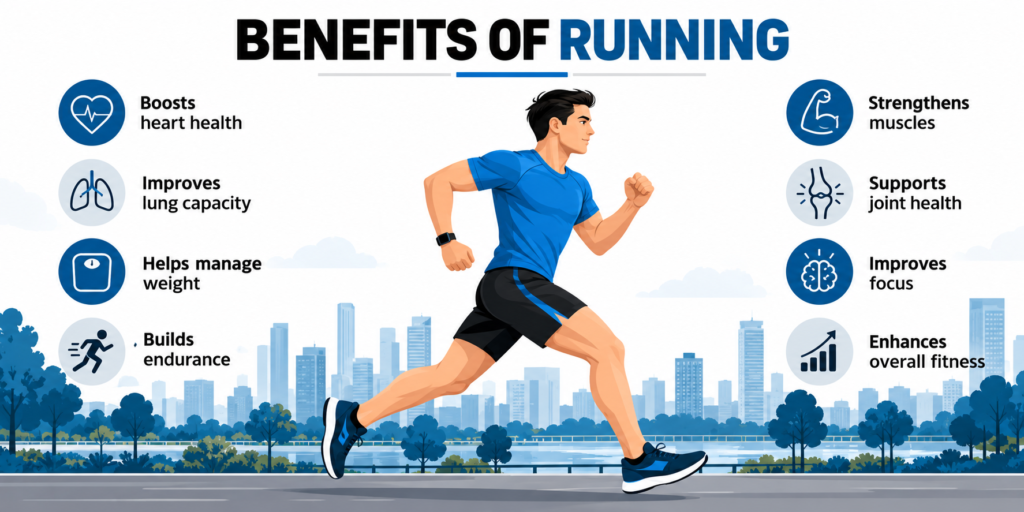
Both movement patterns offer substantial long-term health advantages, but their primary benefits cater to different wellness objectives.
Benefits of Jogging
- Low-Impact Cardiovascular Conditioning: Jogging strengthens the heart and lungs while subjecting joints, tendons, and ligaments to lower impact stress than full-speed running.
- Enhanced Fat Oxidation: Exercising in Zone 2 heart rate zones optimizes fat utilization as a primary fuel source, making jogging a great foundation for aerobic base-building.
- Active Recovery and Stress Reduction: A gentle jog increases blood circulation and promotes endorphin release without overtaxing the central nervous system or elevating cortisol levels.
- Superior Accessibility for Beginners: Because it requires less muscular power and oxygen uptake, jogging provides a smooth transition into regular activity for beginners.
Benefits of Running
- Rapid Caloric Expenditure: Running burns significantly more calories per minute than jogging due to the increased metabolic rate required to move your body weight at higher speeds.
- Increased Muscular Power and Bone Density: Higher ground reaction forces stimulate greater bone mineral density and strengthen the quadriceps, hamstrings, glutes, and calves.
- Post-Exercise Oxygen Consumption (EPOC): Intense running sessions trigger an “afterburn” effect, elevating your baseline metabolic rate for hours following your workout.
- Improved VO2 Max: Pushing into higher heart rate zones increases maximum oxygen uptake, enhancing athletic endurance and overall cardiovascular capacity.
Quick Comparison Guide
Quick Definition
Jogging is a low-to-moderate intensity aerobic activity performed under 6.0 mph (>10-minute mile pace) in conversational heart rate zones. Running is a higher-intensity activity performed over 6.0 mph (<10-minute mile pace) that demands greater cardiovascular output, muscle power, and ground impact.
Summary Table: Which Is Better for Your Goal?
| Goal | Ideal Choice | Key Reason |
|---|---|---|
| Beginner Fitness | Jogging | Lower impact risk, manageable heart rate, easier habit formation |
| Maximum Calorie Burn | Running | Higher rate of energy expenditure per minute |
| Sustainable Weight Loss | Hybrid / Jogging | Easier to sustain over longer durations with less fatigue |
| Bone Density & Power | Running | Greater impact forces stimulate bone adaptation |
| Joint Longevity | Jogging | Reduced stress on knees, hips, and ankles |
Jogging vs Running for Weight Loss and Calorie Burn
When comparing jogging vs running for weight loss, many people assume faster is always better. However, sustainable weight loss depends on total energy expenditure, exercise consistency, and recovery capacity.
Calorie Output Breakdown
On average, a 155-pound individual burns approximately:
- 30 minutes of Jogging (5 mph pace): ~280–300 calories
- 30 minutes of Running (7 mph pace): ~370–400 calories
- 30 minutes of Fast Running (8.5 mph pace): ~450+ calories
Understanding the Calorie and Fat Oxidation Trade-Off
While running burns more total calories per minute, jogging or running which is better for weight loss often comes down to your ability to maintain the routine over time.
- Jogging relies heavily on fat oxidation (burning a higher percentage of calories from fat stores) and produces minimal post-workout hunger surges or fatigue. This makes it easier to combine with strength training and maintain a moderate calorie deficit.
- Running burns more total calories (and carbohydrate stores) per minute. However, high-intensity running can significantly increase appetite and central nervous system fatigue, which may inadvertently lead to overeating or missed workouts if not managed carefully.
For long-term, sustainable weight management, combining regular strength training with low-to-moderate intensity jogging often yields better adherence than forcing high-intensity running sessions every day.
Common Mistakes in Jogging and Running (and How to Fix Them)
| Common Mistake | Potential Impact | The Expert Fix |
|---|---|---|
| Overstriding (Landing Feet Too Far Ahead) | Increases braking forces and places severe mechanical shock on knee joints. | Shorten your stride and increase cadence (aim for ~160–180 steps per minute). |
| Too Much, Too Soon | Leads to overuse injuries like shin splints, plantar fasciitis, or runner’s knee. | Follow the 10% rule: increase total weekly volume or duration by no more than 10% per week. |
| Ignoring Strength Training | Creates muscular imbalances and joint instability during ground impacts. | Integrate 2–3 weekly resistance training sessions focusing on glutes, core, and single-leg stability. |
| Running Every Session at Max Effort | Triggers chronic fatigue, elevated cortisol, and aerobic plateaus. | Keep 80% of your weekly sessions at a gentle jogging pace (Zone 2) and reserve max efforts for 20%. |
Step-by-Step Transition Guide: Moving from Walking to Jogging and Running

If you are a beginner looking to progress safely from walking to a sustainable jog or run, follow this structured 4-week progression model:
Week 1: Foundational Aerobic Base
- Perform 30 minutes of brisk walking 4 times per week.
- Focus on maintaining tall posture, engaging your core, and landing lightly.
Week 2: Intro to Interval Jogging
- Perform a 30-minute workout 3–4 times per week.
- Alternating intervals: Walk for 2 minutes, gentle jog for 1 minute (Repeat 10 times).
Week 3: Expanding Jogging Duration
- Perform a 30-minute workout 3–4 times per week.
- Alternating intervals: Walk for 1 minute, gentle jog for 2 minutes (Repeat 10 times).
Week 4: Continuous Jogging Base
- Warm up with a 5-minute brisk walk.
- Jog continuously for 20 minutes at a comfortable conversational pace.
- Cool down with a 5-minute walk.
Expert Tips for Injury Prevention & Sustainable Cardiovascular Health

- Invest in Biomechanically Fitted Footwear: Replace running shoes every 300 to 500 miles. Work with a specialist running store to choose shoes based on your stride and foot shape.
- Prioritize Active Warm-ups: Never start cold. Perform 5 minutes of dynamic stretches—such as leg swings, walking lunges, and bodyweight squats—before stepping into your jog or run.
- Prioritize Sleep and Nutrition: Aerobic adaptations occur during rest. Ensure adequate protein intake for muscle repair and prioritize 7 to 9 hours of quality sleep.
- Combine Aerobic Work with Strength Coaching: Running and jogging are repetitive single-leg movements. Working alongside experienced coaches—such as the personal training team at Back Bay Fit in Boston—helps identify movement compensations, strengthen glutes and core muscles, and keep you pain-free.
Frequently Asked Questions (FAQs)
What is the difference between jogging and running?
The main difference between jogging and running comes down to speed, intensity, and biomechanics. Jogging is defined as moving at a pace slower than 6.0 mph (a 10-minute mile pace) in lower heart rate zones (Zone 2–3), allowing for easy conversation. Running involves moving faster than 6.0 mph with greater exertion, higher heart rates, longer stride lengths, and increased ground impact forces.
Is jogging better than running for beginners?
Yes, jogging is generally better than running for beginners. Jogging builds an aerobic baseline and conditions tendons and joints with significantly less impact stress than fast running. It also helps beginners establish a sustainable exercise habit without triggering excessive fatigue or overuse injuries.
Which burns more calories, jogging or running?
Running burns more calories per minute than jogging because moving at higher speeds requires greater muscle engagement and energy expenditure. However, total calorie burn depends on duration. A person who jogs comfortably for 45 minutes may burn more overall calories than someone who can only run at top speed for 15 minutes before fatiguing.
Is jogging or running better for weight loss?
Both jogging and running promote weight loss when paired with a balanced, calorie-controlled diet. Running burns calories faster, but jogging is often more sustainable over long periods because it places less stress on the body and relies more heavily on fat stores for energy. Combining moderate jogging with strength training is an ideal formula for long-term weight management.
How fast is jogging compared with running?
Jogging is typically categorized as moving at speeds between 4.0 mph and 6.0 mph (a 10- to 15-minute mile pace). Running generally starts at speeds above 6.0 mph (sub-10-minute mile pace) and extends to sprint speeds of 10+ mph depending on the runner’s fitness level.
Conclusion & Next Steps
When evaluating jogging vs running, there is no universal winner—only the option that best fits your individual fitness level, physical goals, and joint health. Jogging offers an accessible, low-impact pathway to cardiovascular health and sustainable weight loss, while running provides higher calorie burn rates and performance development for well-conditioned athletes. At Back Bay Fit, we believe the best exercise routine is one you enjoy, perform safely, and maintain consistently over time. Ready to optimize your cardio, build functional strength, and protect your joints with expert guidance? Visit Back Bay Fit in Boston’s Back Bay neighborhood to work with our experienced personal trainers, receive a comprehensive movement assessment, and build a workout plan tailored to your long-term health and lifestyle. Schedule your intro consultation at Back Bay Fit today!
