
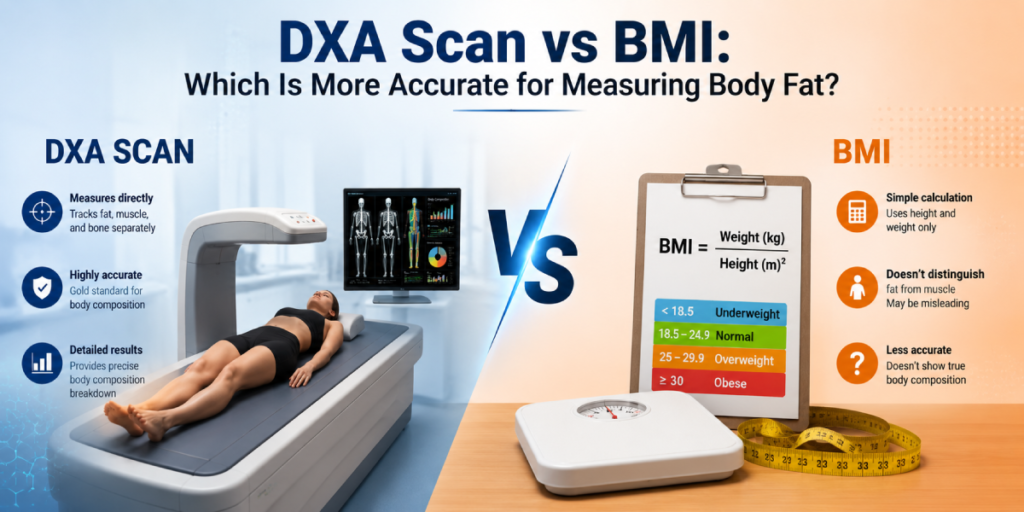
If you have ever stood on a scale, calculated your body mass index (BMI), and felt an immediate wave of frustration, you are far from alone.
Perhaps you have been lifting weights consistently, eating cleanly, and building noticeable strength, only for your doctor’s office chart to label you as “overweight.” Or maybe your weight is technically in the “normal” range, but you feel like your body composition doesn’t reflect a state of vibrant health.
This is the central paradox of modern health tracking: the metric we rely on most—BMI—frequently fails to tell the truth. When evaluating a DXA scan vs BMI, we are comparing a basic, 19th-century mathematical shortcut to a state-of-the-art body composition test.
If you are serious about your fitness journey, understanding the difference between these two measurements is critical. Here is a deep dive into how they work, why accuracy matters, and how to choose the right fitness assessment for your goals.
Quick Comparison (DXA Scan vs BMI)
The Short Answer: A DXA scan is exponentially more accurate than BMI. While BMI only calculates the ratio of your total weight to your height, a DXA body composition scan uses safe, low-dose X-ray technology to separate your body weight into three distinct categories: lean muscle mass, fat mass (including dangerous visceral fat), and bone mineral density.
| Metric | How It’s Calculated | What It Measures | Pros | Cons |
| BMI (Body Mass Index) | Weight (kg)/Height (m)2 | Total body mass relative to height | Free, fast, easy to calculate | Ignores muscle-to-fat ratio; inaccurate for athletes |
| DXA Scan | Dual-energy X-ray absorption | Bone, lean tissue, fat tissue | Medical-grade accuracy; tracks segmental/visceral fat | Requires visiting a facility; minor cost |
What is BMI and Why is Its Accuracy Questioned?
Originally designed in the 1830s by a Belgian mathematician named Adolphe Quetelet, the Body Mass Index (BMI) was never meant to be an individual diagnostic tool. Quetelet created it as a population-level statistical tool to evaluate the overall health of large groups of people.
The math is incredibly simple:
BMI = mass (kg) / height2(m)
The Fatal Flaw of BMI
BMI operates under a highly flawed assumption: that all weight is created equal. It treats one pound of dense, active lean muscle mass exactly the same as one pound of adipose tissue (fat).
Because muscle is roughly 18% denser than fat, highly active individuals, strength lifters, and athletes are frequently misclassified. An athlete carrying substantial muscle may register a BMI of 28 or 30—categorizing them as “overweight” or “obese”—despite having a single-digit body fat percentage.
Conversely, BMI also fails those who suffer from “normal weight obesity” (often colloquially called “skinny fat”). A person can have a perfectly “normal” BMI of 22, but have dangerously low muscle mass and high levels of internal body fat. Because their weight is low, BMI flags them as healthy, missing potential risks for metabolic issues like type 2 diabetes or cardiovascular disease.
What is a DXA Scan and How Does It Work?
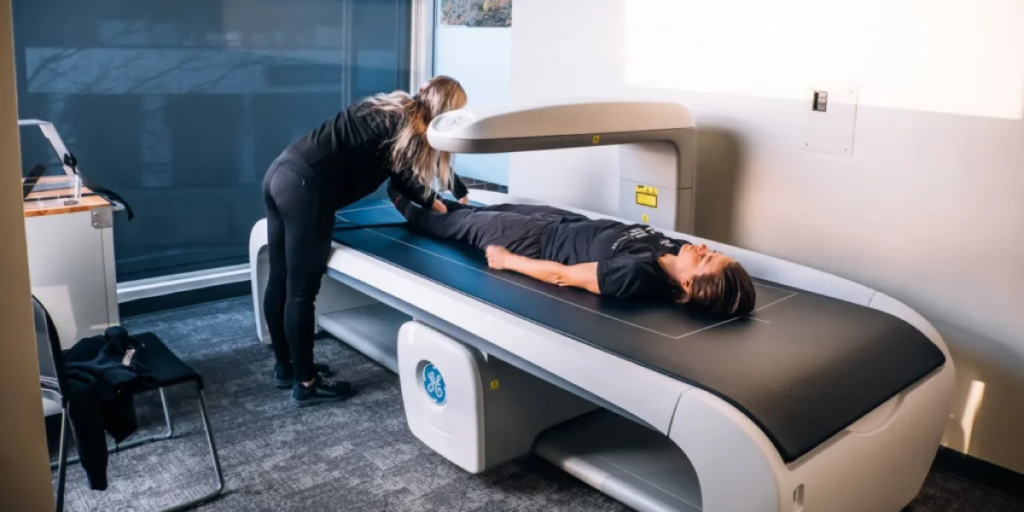
Originally developed as a bone density scan to diagnose osteoporosis, dual-energy X-ray absorptiometry (DXA or DEXA) has evolved into the absolute gold standard for body composition analysis.
A DXA body composition scan works by passing two low-energy X-ray beams through your body. Different tissues absorb these energy levels differently:
- Bone mineral content blocks the beams most significantly.
- Lean tissue (muscles, organs, water) blocks them moderately.
- Fat tissue allows the beams to pass through with the least resistance.
By measuring the attenuation (weakening) of the beams as they exit your body, a computer generates a highly detailed, pixel-by-pixel map of exactly what you are made of.
| FURTHER READING: VO₂ Max Testing Explained |
The Key DXA Scan Benefits
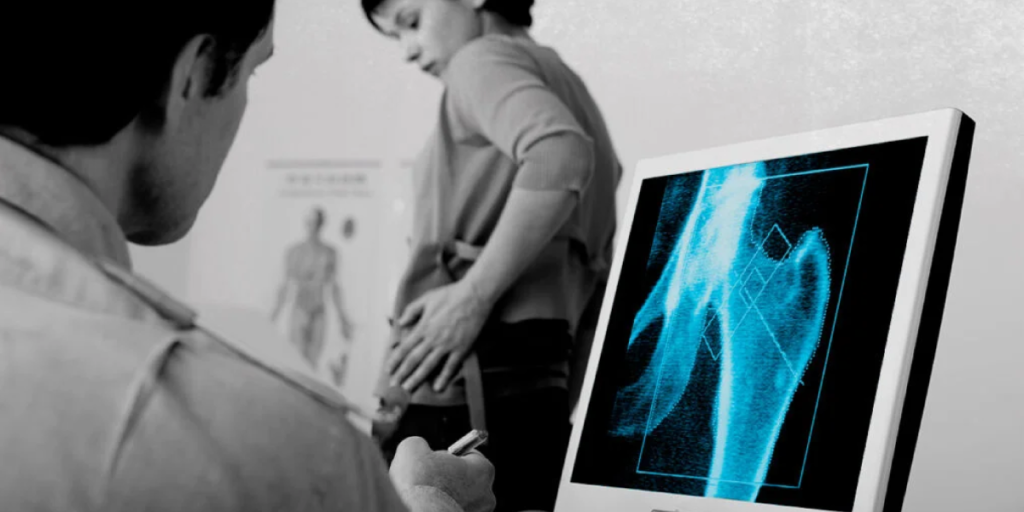
If you are looking to book a body composition test, stepping up to a DXA scan provides insights that no home scale or standard calculations can replicate.
1. Pinpoint Accurate Body Fat Measurement
Instead of guessing or estimating using skinfold calipers (which have a high margin of human error), a DXA scan provides an objective, highly reliable body fat percentage test. It tells you exactly how much fat you carry, right down to the gram.
2. Precise Tracking of Lean Muscle Mass
When you are trying to lose weight, the scale doesn’t tell you what you are losing. If your diet and training are off, you could be losing valuable muscle instead of fat. A DXA scan lets you track your muscle tissue over time to ensure your hard work in the gym is actually yielding results.
3. Visceral Fat Analysis
Not all fat is the same. Subcutaneous fat is the pinchable fat right under your skin. Visceral fat is the hidden fat packed around your internal organs (like your liver and kidneys). High levels of visceral fat are strongly linked to chronic illnesses. DXA is one of the only commercial methods that can accurately isolate and measure visceral fat.
4. Segmental Muscle and Fat Breakdown
Are your legs disproportionately muscular compared to your upper body? Do you have an imbalance in muscle mass between your left and right arm due to a past injury? A DXA report breaks your body down into segments (arms, legs, trunk) so you can target imbalances in your coaching or physical therapy.
| FURTHER READING: Achieve the Hourglass Figure |
Step-by-Step: What to Expect During a DXA Scan
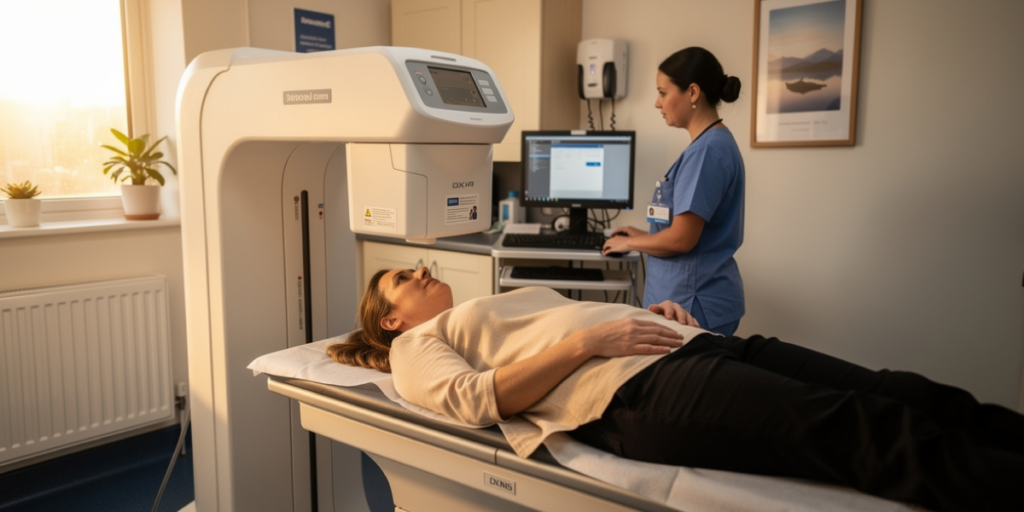
If you have decided to search for a DXA scan near me and schedule an appointment, you might be wondering what the physical process is like. It is incredibly simple, non-invasive, and fast.
1. Preparation and Attire:
Wear comfortable, loose athletic clothing without any metal zippers, buttons, snaps, or underwires. You will need to remove keys, coins, jewelry, and watches, as metal interferes with the X-ray detector.
2. The Setup:
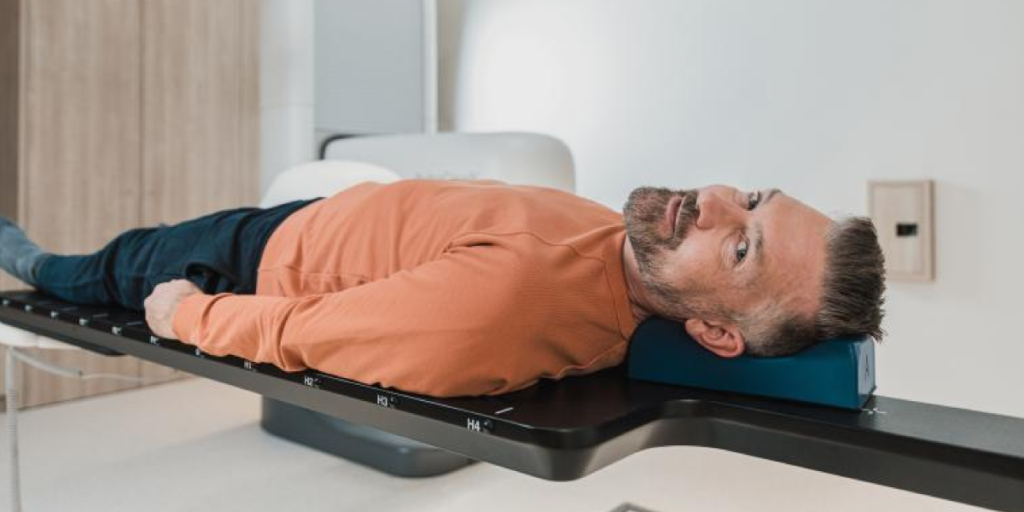
The technician will record your height and weight. You will then lie completely flat on your back on a padded, open scanner table.
3. The Scan:
You will lie completely still while the scanner arm passes slowly over your body from head to toe. The machine is completely open, quiet, and does not cause claustrophobia.
4. Reviewing the Report:
The technician or your coach will print out your comprehensive body composition report. They will walk you through your body fat percentage, bone density scores, muscle mass symmetry, and visceral fat index.
| FURTHER READING: Exploring Traditional Strength Training: Methods and Benefits |
Expert Tips: Maximizing the Value of Your Scans
To make your health screening and body tracking as valuable as possible, keep these best practices in mind:
- Prioritize Consistency: If you plan on taking progress scans, always try to schedule them at the same time of day, under the same hydration conditions. Ideally, scan first thing in the morning on an empty stomach.
- Don’t Scan Too Frequently: Change takes time. Muscle building and fat loss occur over weeks and months, not days. Schedule your scans 12 to 16 weeks apart to see meaningful trends.
- Use the Data to Adjust Your Macros: If a scan reveals you are losing muscle mass during a fat loss phase, it is a clear sign you need to bump up your protein intake or adjust your strength training volume.
Frequently Asked Questions
Is a DXA scan safe?
Yes. The radiation exposure from a single DXA scan is incredibly low—roughly equivalent to the natural background radiation you receive from spending a day outside, or about 1/10th the radiation of a standard chest X-ray.
How much does a DXA scan cost?
Depending on your location and the facility, a standalone body composition scan typically costs between $75 and $150. Many people find this a highly worthwhile investment to get baseline data for their fitness goals.
Is DXA better than hydrostatic weighing or bioelectrical impedance (BIA)?
Yes. While hydrostatic (underwater) weighing is highly accurate, it is often difficult to access and uncomfortable to perform. BIA (the technology used in smart scales and handheld devices) is highly sensitive to your immediate hydration levels, meaning a single glass of water or sweat session can radically throw off the results.
Does health insurance cover a body composition DXA scan?
If a doctor orders a DXA scan specifically to test for osteoporosis (a bone density scan), it may be covered by insurance. However, when used strictly as a fitness assessment or body composition test for fat and muscle tracking, it is typically an out-of-pocket expense.
Conclusion: Stop Guessing, Start Measuring
When evaluating a DXA scan vs BMI, there is no contest if your goal is true physical self-knowledge. BMI is a blunt instrument designed for populations; a DXA scan is a precision scalpel designed for the individual.
If you are committing your time, energy, and resources to eating better and training harder, you deserve an accurate way to measure your hard work. Knowing your true body fat percentage test results, tracking your lean muscle mass, and understanding your metabolic health with a DXA body composition scan empowers you to make smarter, data-driven decisions.
Stop letting a simple bathroom scale dictate your relationship with your body.
Ready to transform your health with custom guidance? At Back Bay Fit, we believe in personalized coaching backed by real data. We construct tailored workout programs and personalized meal plans built around your unique body composition to help you build strength, improve mobility, and hit your target goals. Let’s build a strategy that works for your body.
