
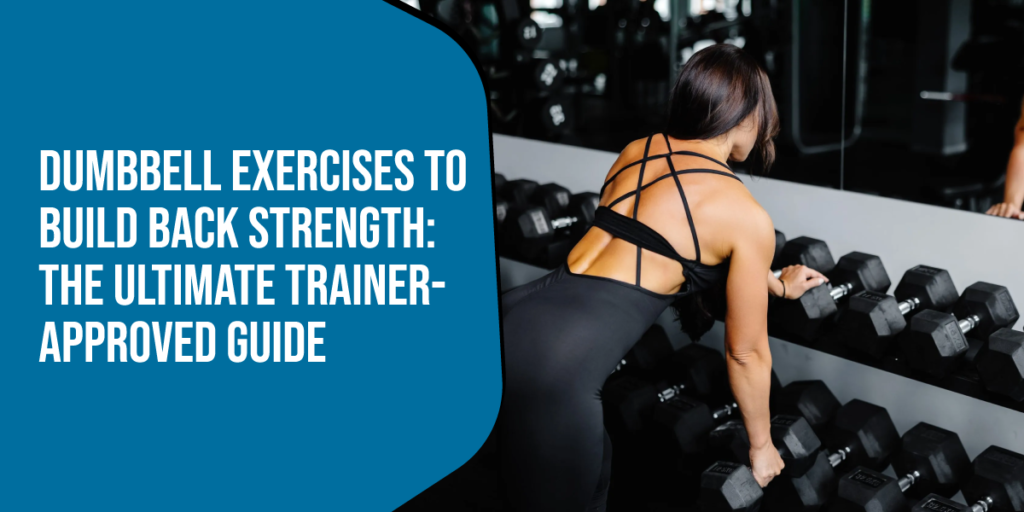
Whether you are looking to reverse the physical tax of desk work, improve your athletic performance, or build an impressive upper body physique, targeted back training is non-negotiable. Many lifters assume that building serious back thickness and strength requires complex cable towers, specialized machines, or heavy barbell setups. However, high-tension dumbbell training offers one of the most effective, versatile, and joint-friendly ways to target every major muscle group in your back.
At Back Bay Fit, Boston’s premier personal training facility, we regularly program dumbbell exercises to build back strength for clients ranging from complete beginners to advanced athletes. In this comprehensive guide, we unpack the anatomical mechanics of back training, break down step-by-step form for the most high-yield dumbbell movements, and provide actionable workout routines tailored to your experience level.
What are Dumbbell Exercises to Build Back Strength?
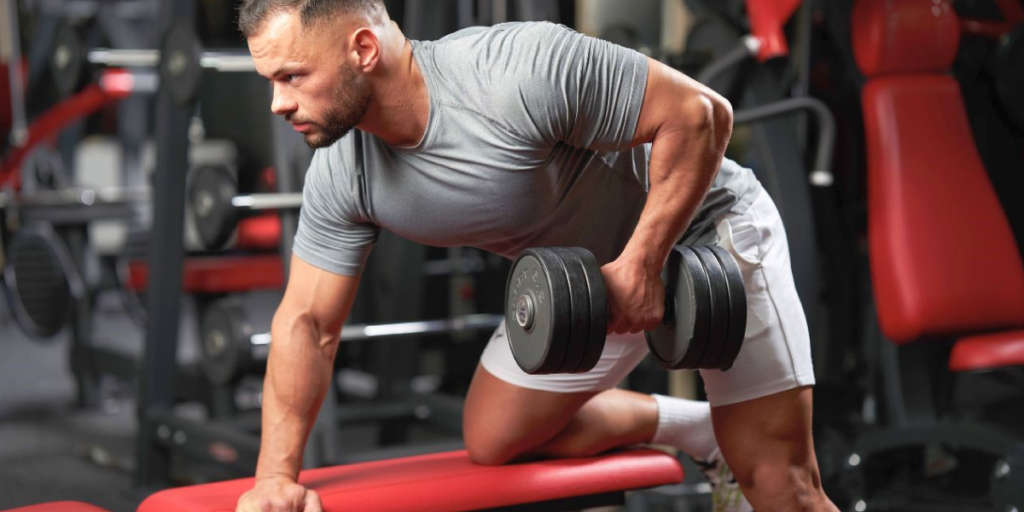
Dumbbell exercises for back strength are free-weight resistance movements designed to target the posterior chain muscles—specifically the latissimus dorsi, rhomboids, trapezius, rear deltoids, erector spinae, and infraspinatus. Unlike barbell movements that fix your hands along a rigid path, dumbbells allow each arm to move independently through a natural arc. This unilateral freedom enables a greater range of motion, deeper muscle contraction, and natural wrist alignment.
Why Dumbbell Back Training Matters
The modern human routine involves prolonged sitting, forward-slumped posture, and dominant anterior pushing movements (such as chest presses and push-ups). Over time, this creates muscular imbalances where the chest and front shoulders become tight and overactive, while the upper and mid-back muscles become weak and lengthened.
Integrating a dumbbell back workout directly counteracts these modern physical patterns by:
- Restoring Postural Balance: Pulling movements retract and depress the shoulder blades, pulling your shoulders back and supporting optimal spine alignment.
- Eliminating Strength Asymmetries: Unilateral dumbbell work forces each side of your body to carry its own weight, preventing your dominant side from compensating.
- Enhancing Joint Longevity: Freedom of movement at the wrists, elbows, and shoulders reduces unnatural torque on joints, making dumbbells ideal for long-term joint health.
- Delivering Full Anatomical Coverage: Dumbbells allow you to easily shift angle, grip, and torso orientation to isolate specific back zones—from upper trap fibers down to lower back stabilizers.
Key Anatomy of the Back

To train your back effectively, you need to understand the main muscle groups you are targeting and their primary anatomical functions:
| Muscle Group | Primary Location | Key Anatomical Function | Best Dumbbell Movement |
|---|---|---|---|
| Latissimus Dorsi (Lats) | Broad mid-to-lower back | Shoulder extension, adduction, and internal rotation | Single-Arm Dumbbell Row, Dumbbell Pullover |
| Rhomboids (Major & Minor) | Between the shoulder blades | Scapular retraction (squeezing shoulder blades together) | Incline Bench Dumbbell Row, Chest-Supported Row |
| Trapezius (Traps) | Upper neck, middle back, lower back | Scapular elevation, depression, and retraction | Dumbbell Shrugs, Incline Y-Raises |
| Rear Deltoids | Back of the shoulders | Horizontal abduction and shoulder external rotation | Rear Delt Dumbbell Fly, High Elbow Rows |
| Erector Spinae | Runs vertically along the spine | Spinal extension, lateral bending, and trunk rotation | Dumbbell Romanian Deadlift, Dumbbell Good Mornings |
Benefits of Building Back Strength with Dumbbells

1. Greater Range of Motion & Muscle Activation
With a barbell, the bar contacts your torso and limits how far back you can pull. Dumbbells allow your hands to travel past your torso, maximizing shoulder blade retraction and generating peak muscle activation in the mid-back and lats.
2. Equalization of Left-Right Strength Deficits
Most individuals have a dominant side. During bilateral barbell lifts, the dominant side often handles up to 60–65% of the total load without visible detection. Dumbbell exercises for back strength eliminate compensation, forcing weak non-dominant muscles to match the load.
3. Reduced Spinal Axial Loading
Heavy barbell deadlifts and bent-over barbell rows place heavy vertical compression forces on the lumbar spine. Single-arm and chest-supported dumbbell exercises deliver deep high-tension mechanical stimulus to the target muscles with a fraction of the spinal strain, making them significantly safer for lifters managing lower back fatigue or past injury.
4. High Versatility and Accessibility
Whether you train in a high-end strength facility like Back Bay Fit or a home gym setup, an adjustable set of dumbbells is all you need for a robust, complete back training regimen.
Quick Definition
Dumbbell back exercises are free-weight resistance movements that target the posterior upper body—specifically the lats, rhomboids, traps, rear delts, and spinal erectors—using dumbbells to improve strength, posture, and muscle symmetry.
The Top 5 Dumbbell Exercises for Back Strength
- Single-Arm Dumbbell Row – Premier exercise for heavy lat and mid-back loading.
- Incline Chest-Supported Dumbbell Row – Best movement for isolating rhomboids and mid-traps without lower back strain.
- Dumbbell Romanian Deadlift (RDL) – Essential compound movement for strengthening the erector spinae and posterior chain.
- Dumbbell Pullover – Ideal for lat width and shoulder mobility.
- Dumbbell Reverse Fly / Rear Delt Raise – Best for postural health and upper back/shoulder posture.
Step-by-Step Execution: The Best Dumbbell Exercises for Back Strength
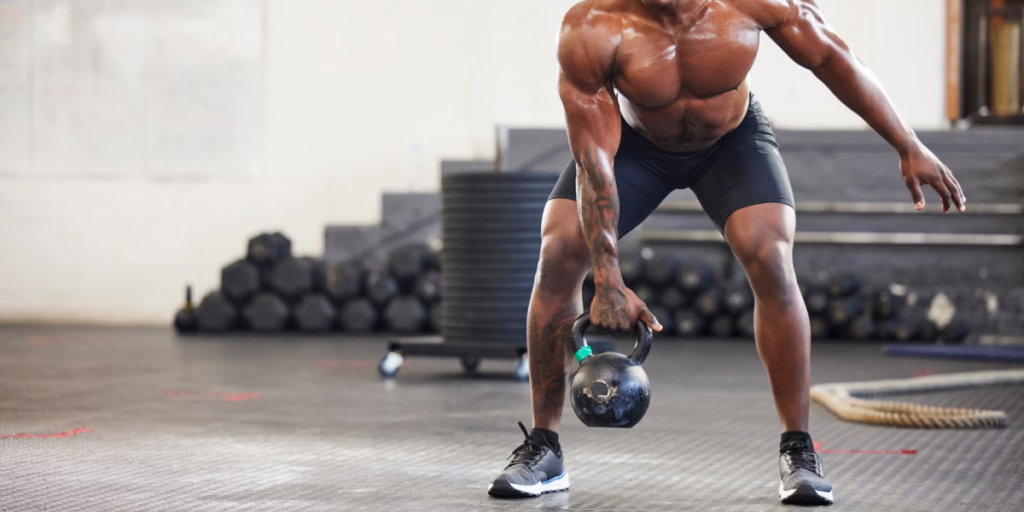
1. Single-Arm Dumbbell Row
Primary Target: Latissimus Dorsi, Rhomboids, Core Stabilizers
Step-by-Step Form:
- Place your left knee and left hand securely on a flat bench, keeping your torso parallel to the floor.
- Hold a dumbbell in your right hand with an arm fully extended, palm facing inward (neutral grip).
- Brace your core and keep your head in a neutral position aligned with your spine.
- Drive your right elbow up toward your hip—not straight up toward the ceiling. Focus on pulling with your back rather than bending your biceps.
- Squeeze your lat tightly at the top position for one second, then slowly lower the dumbbell under control over a 2 to 3-second eccentric phase.
- Complete all reps on one side before switching.
Pro Tip: Imagine pulling your elbow back into your back hip pocket to maximize lat contraction and minimize upper trap overuse.
2. Incline Chest-Supported Dumbbell Row
Primary Target: Mid-Traps, Lower Traps, Rhomboids
Step-by-Step Form:
- Set an adjustable bench to a 30- to 45-degree incline.
- Lie face down with your chest resting firmly against the bench pad and your feet firmly planted on the floor.
- Hold a dumbbell in each hand with arms extended straight toward the ground.
- Initiate the movement by retracting your shoulder blades (pinching them together).
- Pull the dumbbells up until your elbows reach or slightly pass the line of your torso.
- Pause and squeeze your shoulder blades firmly together for 1–2 seconds before lowering under control.
Why It Works: Chest support completely removes lower back strain and eliminates momentum/cheating, forcing pure mid-back isolation.
3. Dumbbell Romanian Deadlift (RDL)
Primary Target: Erector Spinae, Glutes, Hamstrings
Step-by-Step Form:
- Stand upright with feet shoulder-width apart, holding a pair of dumbbells in front of your thighs with an overhand grip.
- Maintain a slight, soft bend in your knees (keep this angle fixed throughout the lift).
- Pull your shoulders back and set your lat tension.
- Hinge at your hips by pushing your glutes straight backward toward the wall behind you.
- Lower the dumbbells close to your body until you feel a deep stretch in your hamstrings (typically mid-shin height).
- Drive through your heels and push your hips forward to return to the starting position, squeezing your glutes and lower back muscles at the top.
Safety Note: Keep your spine neutral throughout the movement. Avoid rounding your lower back at the bottom of the hinge.
4. Dumbbell Pullover
Primary Target: Latissimus Dorsi, Teres Major, Serratus Anterior
Step-by-Step Form:
- Place your upper back perpendicularly across a flat bench, with your feet flat on the floor and hips suspended in a bridge position.
- Hold one dumbbell internally with both hands forming a diamond shape under the inner weight plate, holding it directly above your chest with arms nearly straight.
- Slowly lower the dumbbell back over your head in an arc, keeping a slight bend in your elbows.
- Inhale deeply as you stretch until your upper arms are parallel to the floor or until you feel a deep stretch in your lats.
- Contract your lats and pull the dumbbell back along the same arc to the starting position directly over your chest.
5. Dumbbell Rear Delt Fly (Bent-Over or Incline)
Primary Target: Rear Deltoids, Infraspinatus, Upper Traps
Step-by-Step Form:
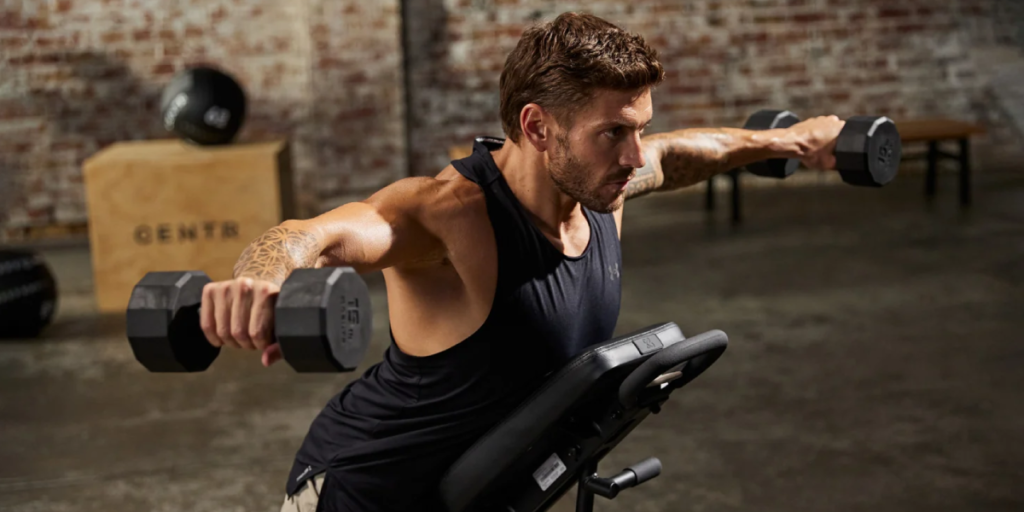
- Sit on the edge of a bench and hinge forward at the hips until your torso is almost parallel to the ground (or lie face down on an incline bench set low).
- Let the dumbbells hang beneath your thighs with palms facing each other.
- With a slight bend in your elbows, raise the weights out to the sides in a wide arc until your upper arms are parallel with the floor.
- Focus on leading with your elbows and squeezing the backs of your shoulders.
- Lower the weights slowly back down without letting them swing at the bottom.
Common Mistakes in Dumbbell Back Exercises (and How to Fix Them)

| Common Mistake | Why It Reduces Progress | The Expert Fix |
|---|---|---|
| Using Too Much Biceps | Pulling primarily with arm bend isolates arms, reducing lat and row work. | Initiate every row by driving your elbow backward, thinking of your hands purely as hooks holding the weight. |
| Excessive Ego Lifting / Swinging | Using body momentum deprives muscles of mechanical tension and increases lumbar injury risk. | Lower the weight, execute 2-second eccentric lowering phases, and eliminate body swaying. |
| Ignoring the Eccentric Phase | Dropping weights fast misses 50% of the hypertrophic stimulus. | Control the weight down over 2–3 seconds on every rep. |
| Rounding the Spine | Flexing the lumbar spine under load stresses intervertebral discs. | Maintain a rigid core, proud chest, and neutral cervical/lumbar spine during all bent-over rows and deadlifts. |
Complete Dumbbell Back Workouts
Dumbbell Back Workout for Beginners
Goal: Form mastery, postural baseline, and neuromuscular control.
Frequency: 2 times per week (with 48-72 hours rest between sessions).
- Incline Chest-Supported Row: 3 sets × 10–12 reps (60–90 sec rest)
- Single-Arm Dumbbell Row: 3 sets × 10 reps per arm (60 sec rest)
- Dumbbell Romanian Deadlift: 3 sets × 10 reps (90 sec rest)
- Dumbbell Rear Delt Fly: 2 sets × 12–15 reps (60 sec rest)
Advanced Hypertrophy & Strength Dumbbell Back Routine
Goal: Maximizing muscle mass, lat width, and total pulling power.
Frequency: 1–2 times per week within a structured split.
- Single-Arm Heavy Dumbbell Row: 4 sets × 6–8 reps per arm (90–120 sec rest)
- Dumbbell Romanian Deadlift: 4 sets × 8–10 reps (120 sec rest)
- Incline Neutral-Grip Dumbbell Row: 3 sets × 10–12 reps (90 sec rest)
- Dumbbell Pullover: 3 sets × 12 reps (60–90 sec rest)
- Dumbbell Rear Delt Fly (Incline Bench): 3 sets × 15 reps (60 sec rest)
Expert Best Practices for Optimal Back Building

- Employ Progressive Overload: Track your weights and reps meticulously. To stimulate ongoing back adaptation, systematically increase weight, reps, or control/tempo over time.
- Use Lifting Straps for Heavy Sets: Your back muscles are significantly stronger than your forearm grip muscles. On heavy rows or deadlifts, grip fatigue often causes set failure before back failure. Utilizing lifting straps lets you train your back to true mechanical fatigue.
- Focus on Full Range Motion: Always allow your shoulder blades to protract slightly at the bottom stretch of a row, then fully retract them at peak contraction.
- Pair Back Training with Personal Coaching: Precision form is critical when working with heavy resistance. Working alongside expert personal trainers ensures personalized mechanical assessments, injury prevention, and optimized program design tailored to your specific anatomy.
Frequently Asked Questions (FAQs)
What are the best dumbbell exercises for building back strength?
The best dumbbell exercises for building back strength include the single-arm dumbbell row, chest-supported incline row, dumbbell Romanian deadlift (RDL), dumbbell pullover, and dumbbell rear delt fly. These movements collectively target all regions of the posterior upper body while providing great mechanical tension and range of motion.
Can you build your back with just dumbbells?
Yes, absolutely. Dumbbells are exceptionally effective for complete back development. They allow for progressive overload, unilateral balance, a greater range of motion, and reduced spinal strain compared to barbell-only training. By varying your grip, angle, and rep ranges, you can build impressive back width, thickness, and functional strength using only dumbbells.
What dumbbell exercise works the entire back?
While no single movement isolates every muscle equally, compound movements like the Single-Arm Dumbbell Row and the Dumbbell Romanian Deadlift engage the vast majority of the posterior chain. The row heavily engages the lats, rhomboids, traps, and rear delts, while the RDL trains the erector spinae along with the glutes and hamstrings.
How often should I train my back with dumbbells?
For most individuals, training the back 2 times per week provides an optimal balance between muscle protein synthesis and recovery. Ensure you allow 48 to 72 hours of recovery between high-volume back sessions for full muscle repair.
How many sets and reps should I do for back exercises?
For strength development, perform 3 to 4 sets of 6 to 8 reps using heavier weight with longer rest periods. For muscle hypertrophy (building size) and endurance, aim for 3 to 4 sets of 8 to 15 reps with moderate weights and controlled eccentric tempos. Aim for 10 to 20 total working sets per week spread across your training schedule.
Conclusion & Next Steps
Building a strong, resilient, and visually impressive back does not require an endless array of complex gym machinery. By mastering core dumbbell exercises to build back strength—such as single-arm rows, chest-supported rows, and Romanian deadlifts—you can correct posture, eliminate muscle imbalances, and unlock real pulling power. Remember that consistency, proper execution, and progressive overload are the core pillars of any successful strength routine. Ready to take your strength training to the next level with individualized guidance? Visit Back Bay Fit in Boston to work with top-tier strength coaches, refine your lifting technique, and get a customized training program designed specifically for your goals. Connect with Back Bay Fit today to schedule your intro training session!
