
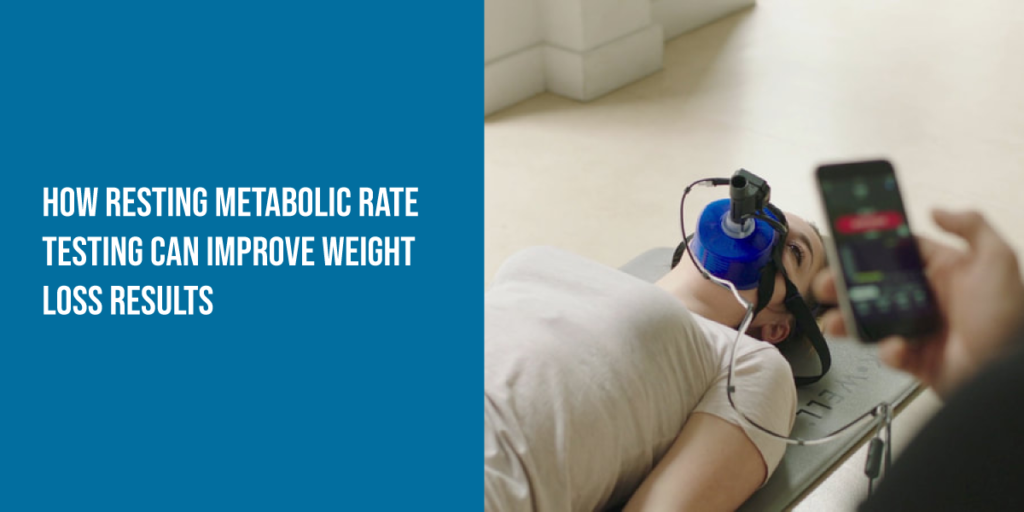
If you have ever tried to lose weight, you have likely run into the standard piece of advice: eat less and move more. It sounds simple, but anyone who has spent weeks tracking macros, cutting portion sizes, and sweating through intense workouts only to watch the scale refuse to budge knows that the standard formula often falls short.
The frustrating truth is that standard online calorie calculators are guessing. They use generic, population-averaged equations developed decades ago to estimate how many calories you burn. But your body isn’t a statistical average. Your history, muscle mass, hormonal profile, and genetics all dictate your unique metabolism.
To break through frustrating plateaus and stop the guessing game, elite performers and longevity-focused individuals turn to resting metabolic rate testing. By directly measuring exactly how much energy your body consumes at complete rest, an RMR test replaces guesswork with precise, actionable data.
This comprehensive guide breaks down exactly how resting metabolic rate testing can transform your weight loss results, optimize your nutrition planning, and provide the ultimate blueprint for sustainable fat loss.
The Core Science: What is Resting Metabolic Rate Testing?
Before diving into how metabolic data alters your weight loss trajectory, we need to understand exactly what we are measuring during a metabolism test.
| Component of TDEE | Percentage of Daily Burn | Description |
| Resting Metabolic Rate (RMR) | 60% – 75% | The baseline energy required to maintain vital life functions (breathing, brain activity, cellular repair) at complete rest. This is the core metric measured during metabolic testing. |
| Thermic Effect of Activity (TEA) | 15% – 30% | The energy expended during deliberate workouts, exercise, and physical movement throughout the day (including daily chores, steps, and fidgeting). |
| Thermic Effect of Food (TEF) | ~10% | The caloric cost of digesting, absorbing, processing, and storing the nutrients you consume. |
Your Total Daily Energy Expenditure (TDEE) is the total number of calories your body burns in a 24-hour period. It is composed of three main parts:
- Resting Metabolic Rate (RMR): The energy required to maintain vital autonomic functions—such as breathing, heart rate, cellular repair, and brain activity—while at complete rest. For most individuals, RMR accounts for a massive 60% to 75% of daily calorie burn.
- Thermic Effect of Food (TEF): The energy your body uses to digest, absorb, and metabolize nutrients (roughly 10%).
- Thermic Effect of Physical Activity (TEA): The energy expended during deliberate exercise and non-exercise activity thermogenesis (NEAT), like walking, fidgeting, and daily chores.
How a Calorie Burn Test Works
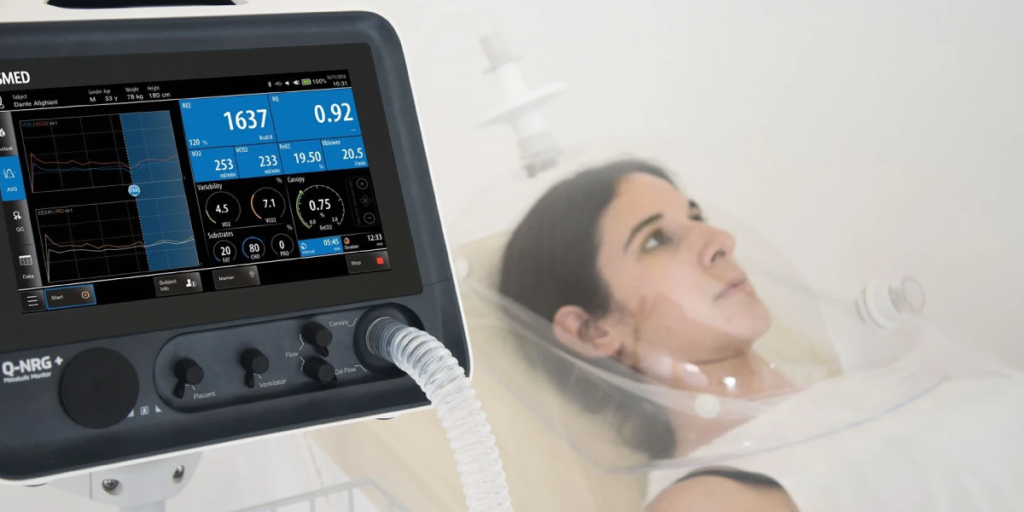
A professional calorie burn test utilizes a scientific methodology called indirect calorimetry.
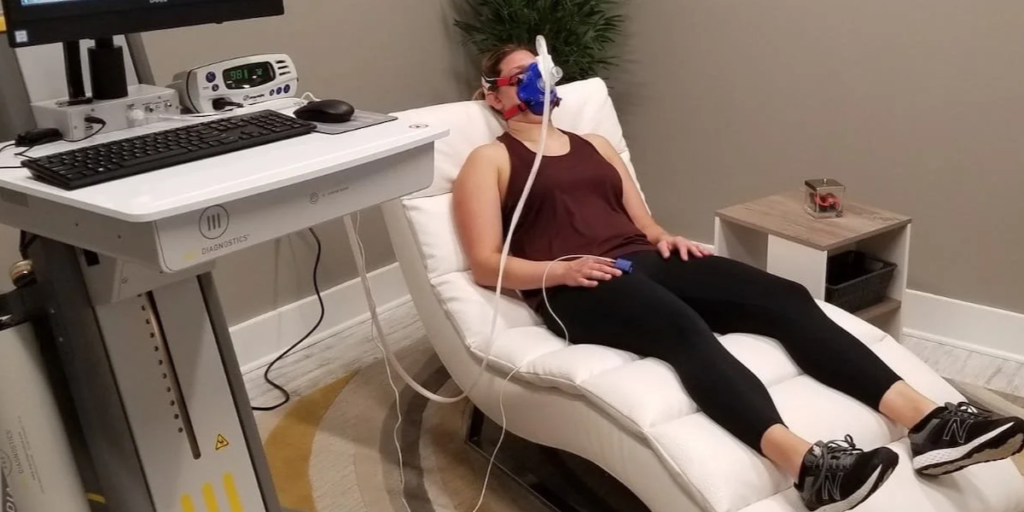
During the assessment, you wear a specialized, airtight mask or breathe through a sterilized mouthpiece connected to a metabolic cart while resting comfortably in a reclined position. The device measures the precise volume of oxygen ($O_2$) your body consumes and the amount of carbon dioxide ($CO_2$) you exhale.
Because cellular respiration burns oxygen and produces carbon dioxide at a fixed mathematical ratio based on the fuel source being utilized, analyzing your breath gases allows the metabolic cart to calculate your exact caloric expenditure in real-time.
Quick Reference: The Metabolic Testing Blueprint

What is an RMR Test?
A non-invasive diagnostic test that measures the exact number of calories your body burns at rest by analyzing your oxygen consumption and carbon dioxide output.
Why Generic Formulas Fail
Standard fitness apps rely on formulas like the Harris-Benedict or Mifflin-St Jeor equations. While useful for broad populations, research shows these calculators can over- or underestimate an individual’s actual metabolic rate by up to 20% to 30%.
| Individual Profile | Predicted RMR (Formula) | Actual RMR (Tested) | Hidden Caloric Discrepancy | Resulting Outcome |
| High Muscle Mass (Athlete) | 1,650 kcal | 1,950 kcal | -300 kcal (Under-eating) | Muscle loss, fatigue, stalled recovery |
| Metabolic Adaptation (Chronic Dieter) | 1,400 kcal | 1,150 kcal | +250 kcal (Over-eating) | Frustrating weight loss plateaus |
4 Critical Ways RMR Testing Enhances Weight Loss Results
1. Pinpoints Your True Caloric Baseline
To lose body fat, you must establish a caloric deficit—consuming fewer calories than your body expends. However, if you don’t know your exact baseline, your deficit is based on a guess.
If an online tool estimates your baseline is 2,000 calories, you might set your weight loss intake at 1,500 calories. But if an RMR analysis reveals your true baseline is actually 1,600 calories due to genetic factors or prior dieting, your 1,500-calorie intake yields an incredibly slim deficit. This explains why you might feel like you are starving while the scale barely moves. A weight loss testing protocol establishes an exact data ceiling to build an accurate, predictable deficit.
2. Tailors Precise Nutrition Planning
A comprehensive metabolism assessment provides more than just a raw calorie number; it determines your Respiratory Exchange Ratio (RER).
RER measures the ratio of eliminated $CO_2$ to absorbed $O_2$. This ratio tells clinicians exactly which macronutrient substrates your body prefers to burn for fuel at rest:
- An RER close to 0.70 indicates your body is highly efficient at burning fats for fuel.
- An RER closer to 1.0 indicates a reliance on carbohydrates at rest, which can point to metabolic inflexibility.
Knowing whether your body is a proficient fat-burner or carb-dependent allows a coach to tailor your macronutrient splits (proteins, fats, and carbohydrates) to match your cellular reality.
3. Identifies and Quantifies “Metabolic Damage”
When you restrict calories drastically for extended periods, your body initiates a survival mechanism known as adaptive thermogenesis (often called metabolic adaptation). Your thyroid down-regulates, neat activity drops unconsciously, and your tissues become highly efficient—meaning your body learns to survive on fewer calories.
If you have spent years yo-yo dieting, your RMR may be significantly depressed compared to what a calculator says it “should” be. Metabolic testing reveals if your metabolism has slowed down. If it has, the answer isn’t to eat less; it’s to implement a structured reverse dieting phase to restore your metabolic health before attempting another fat loss cycle.
4. Maximizes Fat Loss While Preserving Lean Muscle
The goal of body recomposition should be losing fat mass, not just overall weight. When your caloric deficit is too aggressive, your body catabolizes (breaks down) lean skeletal muscle tissue for energy.
Losing muscle directly lowers your RMR, making it progressively easier to regain the fat later. By utilizing fat loss testing, you can map out a gentle, highly targeted caloric deficit that stimulates fat tissue mobilization while protecting your metabolic engine—your muscle.
Step-by-Step: What to Expect During an RMR Test

To ensure your resting metabolic rate data is perfectly accurate, you must follow strict pre-test protocols. Violating these rules can artificially spike or lower your measured oxygen consumption.
Pre-Test Preparation Checklist
- Fast for 4 to 5 Hours: Do not consume food, caloric beverages, or supplements prior to your appointment.
- Avoid Stimulants for 12 Hours: No caffeine, nicotine, pre-workout supplements, or energy drinks, as these artificially accelerate your heart rate and metabolic output.
- Avoid Intense Exercise for 24 Hours: Strenuous workouts induce Excess Post-Exercise Oxygen Consumption (EPOC), which will artificially inflate your resting calorie burn data.
The In-Clinic Testing Process
- Acclimation: You will rest quietly in a dimly lit, temperature-controlled room at Back Bay Fit for 10 to 15 minutes to allow your heart rate and nervous system to settle into a true resting state.
- Equipment Setup: A soft, silicone mask or standard testing mouthpiece will be fitted comfortably over your nose and mouth to capture all expired air.
- Data Collection: You will lie or sit completely still for 15 to 20 minutes, breathing normally. You should avoid looking at your phone, talking, or falling completely asleep.
- Analysis: The metabolic software compiles the breath data, filtering out early variances to produce a clean, highly reliable report detailing your exact daily caloric burn, RER, and metabolic efficiency metrics.
Frequently Asked Questions
What is an RMR test?
An RMR (Resting Metabolic Rate) test is a non-invasive laboratory assessment that measures the exact number of calories your body requires to perform basic life-sustaining functions at rest. By analyzing the oxygen you consume and the carbon dioxide you breathe out, it determines your unique baseline daily calorie expenditure.
How does RMR testing help with weight loss?
It eliminates the mathematical guesswork that causes most diets to fail. By knowing your precise daily caloric ceiling, you can build a predictable, accurate caloric deficit that optimizes fat loss, helps you break through stubborn weight plateaus, and prevents you from accidentally under-eating or over-eating.
Is RMR different from BMR?
Yes, though they are very similar. Basal Metabolic Rate (BMR) measures your energy expenditure under incredibly restrictive clinical conditions—typically immediately upon waking up in a laboratory after an overnight stay, before any movement occurs.
Resting Metabolic Rate (RMR) is slightly less restrictive. It measures energy expenditure after a short period of rest and fasting, making it highly accurate for real-world application and clinical fitness environments. Generally, RMR values read slightly higher than BMR values by about 10%.
How accurate is an RMR test?
When performed using professional-grade, medical indirect calorimetry equipment (metabolic carts) like those utilized at Back Bay Fit, RMR testing is considered the gold standard of metabolic measurement, accurate to within 1% to 2% of actual metabolic output. Consumer smartwatches and online calculators cannot match this precision.
Who should get metabolic testing?
Metabolic testing is highly beneficial for anyone who:
- Experiences weight loss plateaus despite careful macro tracking.
- Wants an optimized, data-driven plan for body recomposition.
- Has a history of chronic yo-yo dieting or suspected metabolic adaptation.
- Is an athlete looking to precisely fuel performance without gaining body fat.
- Wants to monitor their metabolic health as part of a comprehensive longevity and wellness strategy.
Can RMR testing improve nutrition planning?
Absolutely. Beyond establishing your exact daily calorie goals, the test identifies your fuel utilization profile (whether you primarily burn fats or carbohydrates at rest). This data allows your nutrition coach to build custom macronutrient ratios that align with your unique cellular metabolism.
Optimize Your Metabolism at Back Bay Fit
Losing weight effectively isn’t about working yourself to exhaustion or subscribing to generic diet templates. It is an exercise in applied biometrics.
By integrating resting metabolic rate testing into your wellness strategy, you move away from frustrating trial-and-error and step into a system of absolute clarity. You discover the exact parameters of your metabolism, allowing you to eat intentionally, train with clear purpose, and achieve lasting fat loss without compromising your energy, performance, or longevity.
At Back Bay Fit, we pair advanced metabolic testing with elite physical coaching, comprehensive DXA body composition scans, and dedicated physical therapy to provide Boston’s premier data-driven fitness experience. Stop guessing at your nutrition and build a body optimized for life.
Ready to uncover your unique metabolic profile? Schedule your professional Resting Metabolic Rate Test at Back Bay Fit today and secure the data blueprint you need to unlock sustainable weight loss.
